English
 简体中文
简体中文 French
 日本語
日本語 Korean
 Português
 Русский
 Spanish



NEWS
The two temperature zone step heating tube furnace is a high-temperature experimental equipment with dual independent temperature zones and the ability to achieve step heating function. Its core function is to provide a multi temperature range collaborative processing experimental environment for material research through dual temperature zone independent temperature control and step heating program, meeting the requirements of complex processes for temperature gradient, atmosphere control, and heat treatment efficiency. Let's take a detailed look at the function of the two temperature zone stepped heating tube furnace from multiple dimensions below!
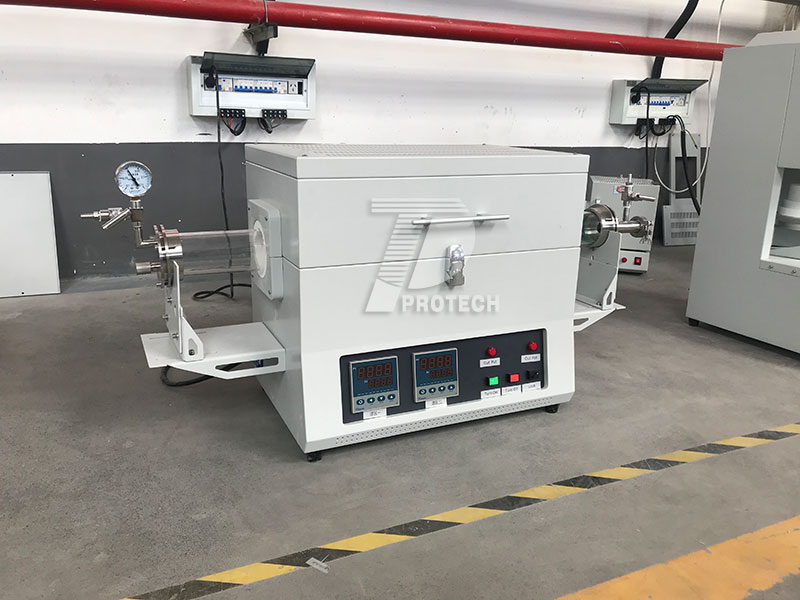
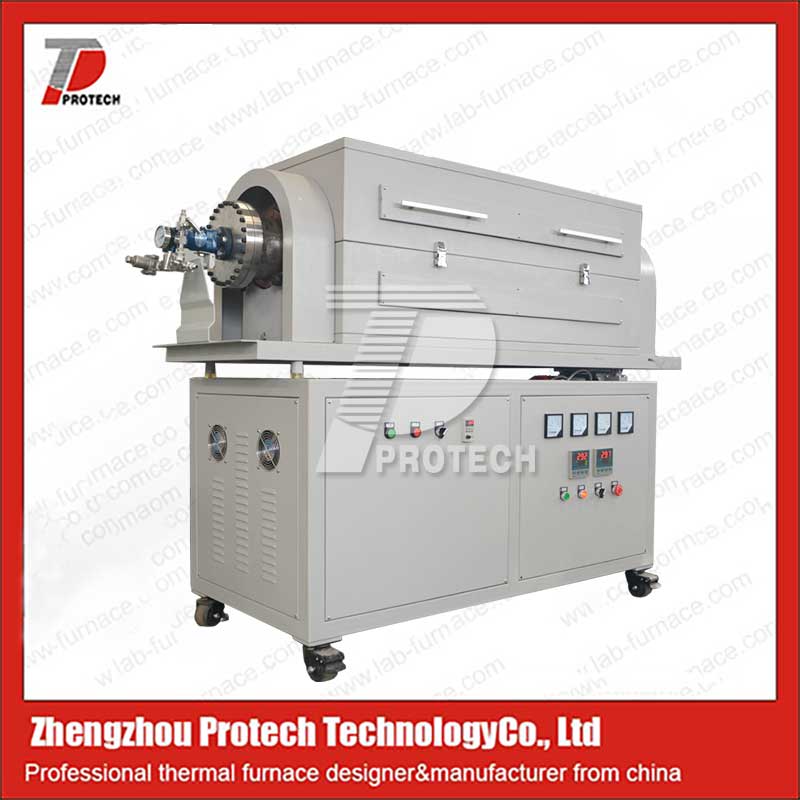
A commonly used two-stage stepped heating tube furnace (click on the image to view product details)
1. Functional features: Collaborative design of dual temperature zones and stepped heating
Dual temperature zone independent temperature control
There are two independent heating zones inside the furnace, each equipped with an independent temperature control system (such as PID intelligent regulation), which can set the target temperature, heating rate, and insulation time separately.
Temperature gradient control: Two temperature zones can form a temperature difference of up to 300 ℃ (such as 900 ℃ in zone one and 1200 ℃ in zone two), meeting the material's phase transition, reaction, or crystallization needs in different temperature ranges.
Typical parameters: Temperature zone length of 200-400mm, constant temperature zone accuracy of ± 5 ℃, adjustable heating rate of 2-30 ℃/min.
Ladder heating program
Support multi-stage program temperature control (such as 30 stages), can preset a complete curve of heating insulation cooling, and achieve automated experimental processes.
Dynamic atmosphere synergy: During the heating stage, inert gases (such as N ₂, Ar) can be introduced to protect the material. During the high temperature stage, reducing gases (such as H ₂) can be switched to promote the reaction. During the cooling stage, an inert atmosphere can be restored to prevent oxidation.
Vacuum and Atmosphere Control
Equipped with a vacuum system (such as a molecular pump unit), the ultimate vacuum degree can reach 10 ⁻ Pa, effectively suppressing the volatilization of material components at high temperatures.
Gas flow control systems (such as mass flow meters) can adjust the intake volume and support mixed gas ratios (such as CO/CO ₂ partial pressure control).
2. Application scenario: Covering material research needs in multiple fields
Nanomaterial synthesis
Case: In the preparation of carbon nanotubes, uniform growth of nanoparticles is achieved by controlling the volatilization of raw materials (high temperature zone) and substrate deposition (low temperature zone) through dual temperature zones.
Advantages: Step heating avoids material agglomeration, temperature gradient promotes directional growth, and improves product purity and morphology controllability.
Semiconductors and Electronic Materials
Case: In the co firing of perovskite solar cell electrode materials, a dual temperature zone transition zone design (gradient insulation layer+water cooling system) reduces interface diffusion and interface resistance.
Advantages: Accurately control lattice distortion, optimize material electrical properties, and meet the requirements of high-precision device preparation.
Heat treatment of ceramics and metal materials
Case: In the sintering of zirconia ceramics, a step-by-step heating program combined with dynamic vacuum switching (low vacuum in the heating stage, high vacuum in the high temperature stage) shortens the sintering cycle and improves the density.
Advantages: Simulating gradient sintering environment, reducing thermal stress cracks, and improving material mechanical properties.
Research and development of functionally graded materials
Case: In the preparation of thermoelectric conversion devices (such as bismuth telluride based composite materials), a dual temperature zone is used to construct a thermal field with a temperature difference of 300 ℃, strictly controlling lattice distortion and improving thermoelectric conversion efficiency.
Advantages: Achieving continuous gradient changes in material properties and expanding application scenarios (such as spacecraft thermal protection systems).
3. Technical advantage: Improve experimental efficiency and result reliability
Avoid sample transfer contamination
The dual temperature zone design enables materials to undergo multi-step heat treatment within the same furnace tube, reducing heat loss and pollution risks in intermediate stages, making it more suitable for materials sensitive to oxidation, such as nanoparticles and films.
Energy saving and efficiency
The ceramic fiber furnace and double-layer shell structure (equipped with air cooling system) reduce energy consumption, and the surface temperature is less than 60 ℃ when heated to 1700 ℃, ensuring operational safety.
The step-by-step heating program runs automatically, reducing manual intervention and improving experimental reproducibility.
Data recording and remote control
Some models are equipped with conversion interfaces that support computer interconnection, enabling real-time tracking of temperature curves, output of historical records and reports, facilitating data analysis and process optimization.
Summary
The two-stage stepped heating tube furnace provides high-precision and high-efficiency heat treatment solutions for fields such as materials science, semiconductors, and new energy through three major technologies: independent temperature control in dual temperature zones, stepped heating program, and dynamic control of vacuum and atmosphere. Its value lies in:
Meet complex process requirements, such as gradient sintering, multi-step reactions, and preparation of atmosphere sensitive materials;
Improving material performance: optimizing microstructure (such as grain size and interface bonding) through temperature control;
Accelerate R&D process: Automated programs and remote control reduce experimental cycles and support high-throughput screening.
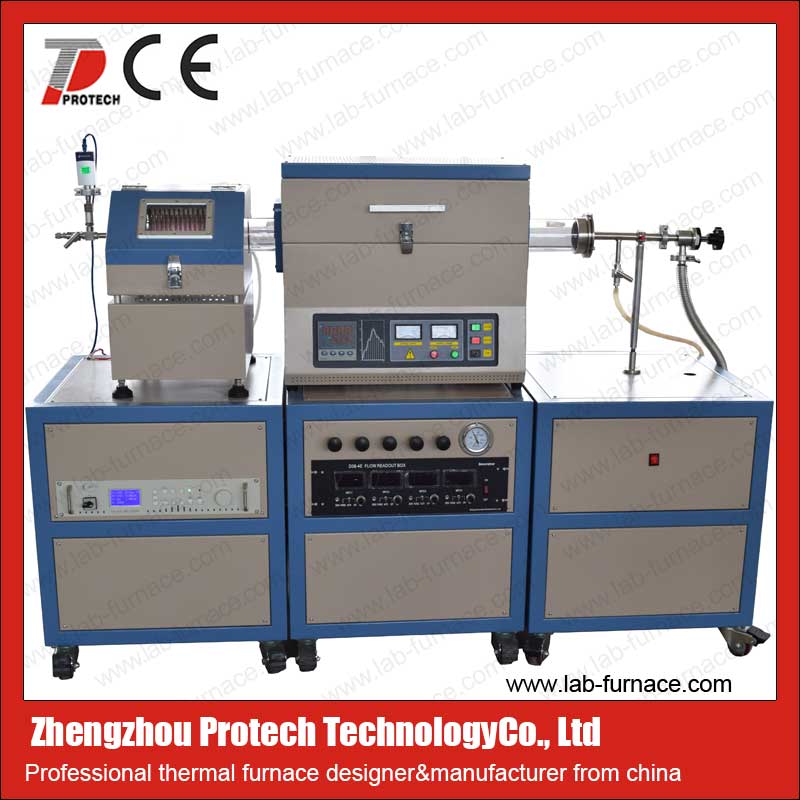
This type of equipment is a commonly used tool for studying the physical/chemical changes of materials at different temperatures, or for scenarios that require industrial scaling up of preparation processes.Click to learn more multi zone tube furnaces! Or click on online customer service to learn more about product information!
Leave A Message